

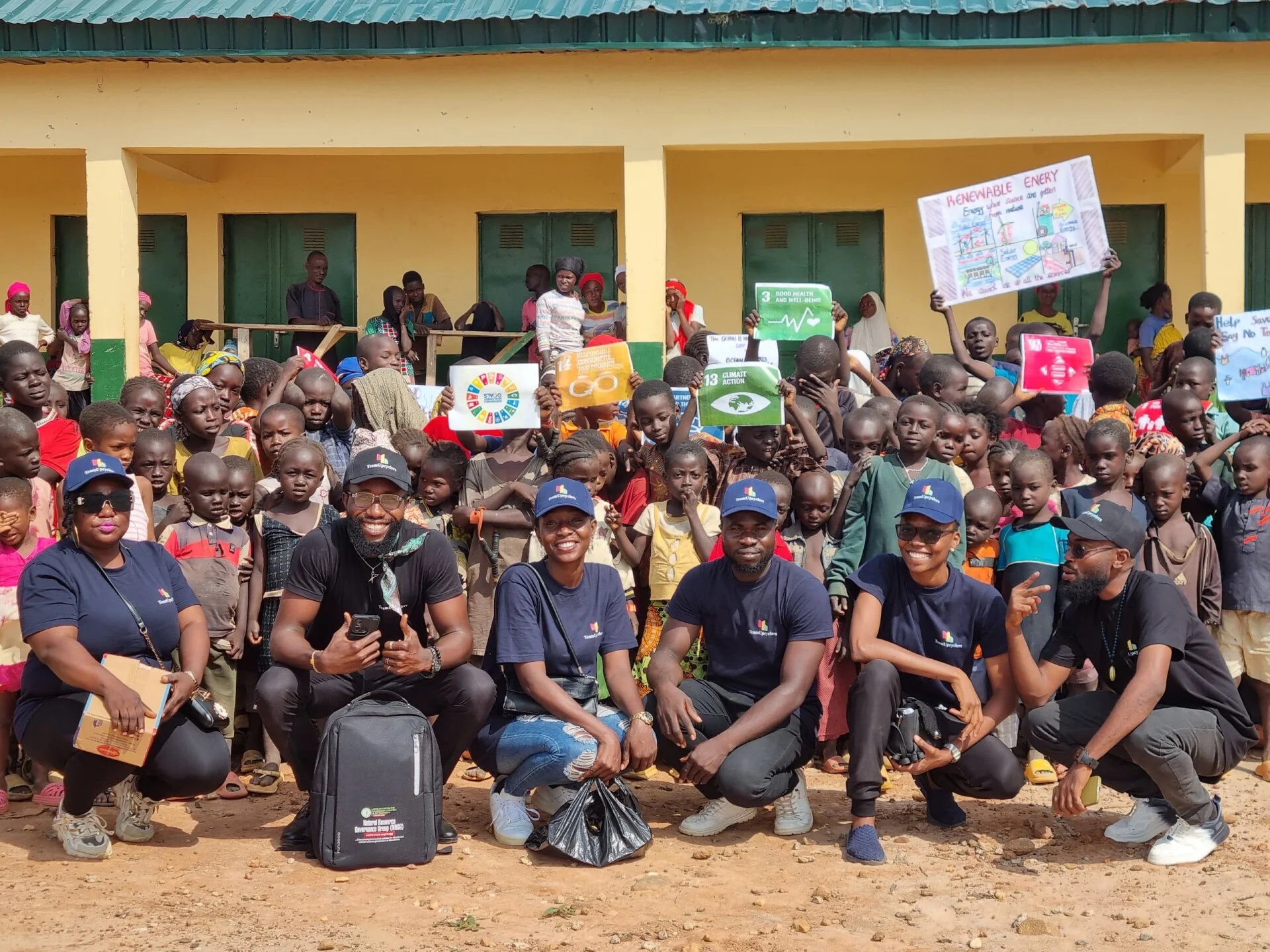
Climate education becomes powerful when it moves beyond theory and enters daily life. In six Internally Displaced Persons camps across Abuja, this transformation is already happening.
Through structured training sessions on the Sustainable Development Goals, renewable energy and waste management, TeamUpcyclers has equipped 782 displaced individuals with practical knowledge and skills that are already changing behaviors and improving livelihoods.
Why SDG Education Matters in Displacement Settings
Many displaced communities face urgent challenges including limited resources, poor waste management systems and minimal exposure to environmental education.
During our outreach, we discovered that most participants had never heard about the United Nations Sustainable Development Goals. This gap presented both a challenge and an opportunity.
By introducing simplified SDG education with a focus on climate action, renewable energy and circular economy practices, we helped participants understand:
- What climate change means for their community
- How waste contributes to environmental degradation
- How simple changes can reduce emissions
- How waste can be converted into economic opportunity
Practical Training: Turning Knowledge Into Skills
Education alone is not enough. Our sessions included hands on demonstrations such as:
- Crafting reusable sanitary pads from textile waste
- Converting plastic and bio waste into simple renewable energy solutions
- Understanding waste segregation and responsible disposal
These practical activities ensured that participants did not just learn but also applied the lessons immediately.
“When we learned how to turn waste into something useful, we realized we could protect our environment and earn income at the same time.”
Measurable Impact
The results of this initiative were significant:
- 782 IDPs trained directly
- 7795 individuals reached indirectly
- Six IDP camps engaged
- Twenty percent reduction in greenhouse gas emissions within the target community
Beyond numbers, the most powerful outcome was behavioral change. Participants reported:
- Reduced roadside dumping
- Increased awareness about climate responsibility
- Interest in continued training
Community Collaboration
This project was implemented in collaboration with camp stakeholders, volunteers and development partners. Their support ensured smooth coordination, mobilization of participants and strong community engagement.
The project has sparked demand for expanded training across additional camps in Abuja.
What Comes Next
Our goal is to expand the program to the remaining IDP camps and deepen hands on plastic recycling training. With adequate funding and partnerships, we aim to scale this model and create sustainable production centers that generate green jobs.
Interested in supporting climate education in vulnerable communities?
Explore our Partners page or contact us to learn how you can collaborate.